
19/12/25 Prices
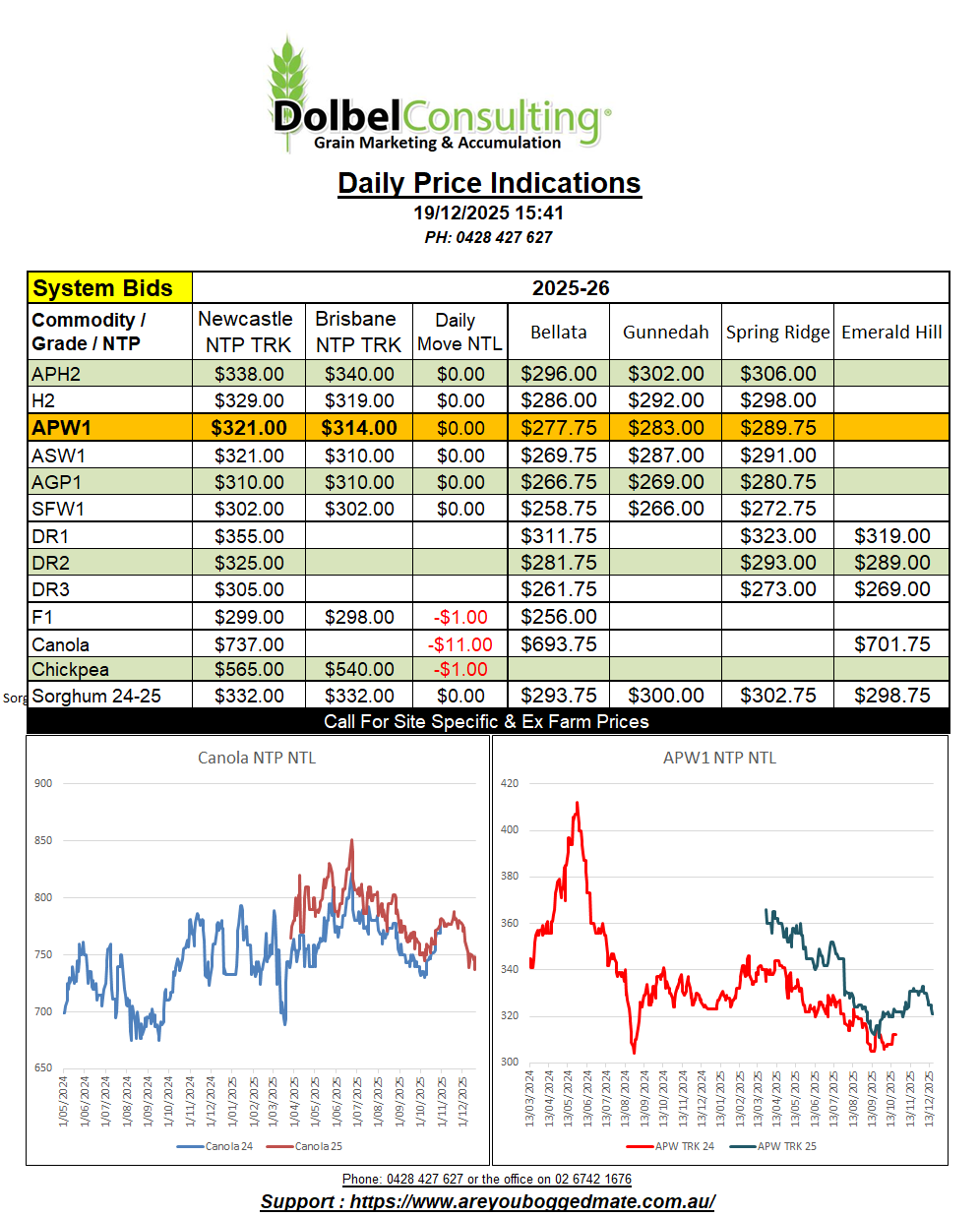
Hard red winter wheat futures at Chicago showed signs of a pulse last night. Some may say about time, others may ask why. Those asking why are more likely to be consumers. HRWW has been priced at a discount to SRWW for a while now, this is not “normal”. It maybe not as comparable as APW vs H2 here in Australia as you might think, but it’s not exactly chalk and cheese either.
The Asian consumer has been in the box seat to take advantage of what could prove to be the most affordable period in mid term history that they will see for the accumulation of milling wheat. The good pace of both US and Russian exports proves they have not overlooked this opportunity.
For the sellers of milling wheat it has meant a challenging time though. At current values for wheat, and at the current cost of production, producers all over the world are wondering how sustainable milling wheat production is. The old saying that “bad prices fix bad prices” is starting to ring true as producers in the southern hemisphere look towards 2026 sowing programs and the options they have. None of which look incredibly attractive at the moment.
This brings up the question of just how will the producer react. Diversity of crops sown the first thought, for those that have that potential. The other is fallow, will there simply be fewer winter crop acres sown.
This is an interesting question, especially for the sorghum belt in Australia. With Brazil expected to join the list of sellers of sorghum to China over the next few years, what does this potentially mean for sorghum here. Those of us that have been doing this long enough know that the sorghum market has only recently been fed steroids by the Chinese market. A quick look over the last 20 years quickly shows that exports have gone from roughly 500kt of a 2mt+ crop 25 years ago, to closer to 95% of the crop in recent years. Sorghum prices, originally bench marked against competing feed grains, gradually improved to be as good or better than prime hard wheat. Will we go back to a domestic feed value for sorghum, it’s unlikely, but the days of selling sorghum at these premiums may be numbered if Brazil come to the party in the fashion they have arrived in the soybean market.