
11/3/26 Prices
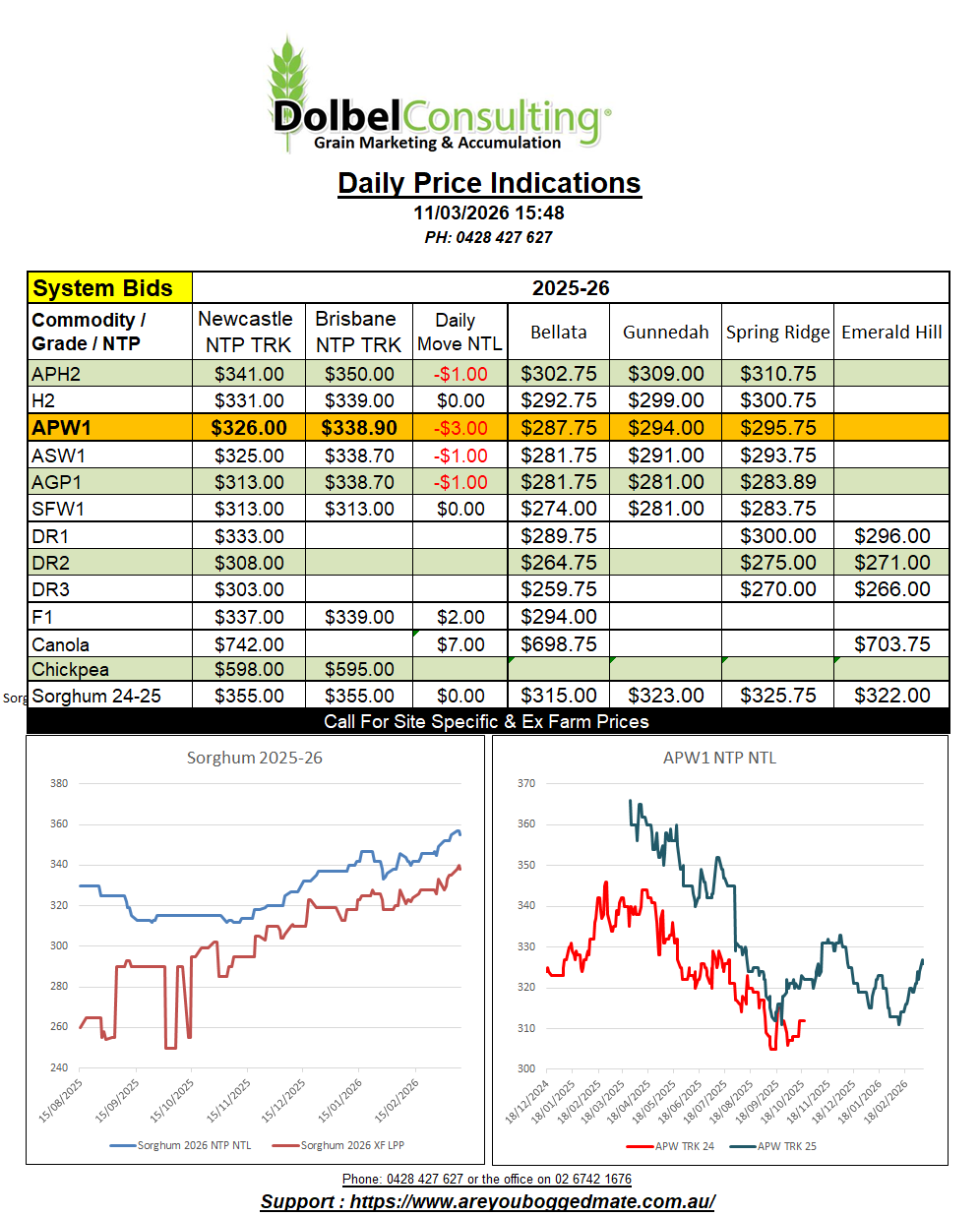
There was a USDA World Ag Supply and Demand report out last night. It generally failed to rate a mention in the lead up to the release, lots of other news to concentrate on, and let’s be frank, the international fundamentals of the grain market haven’t exactly been the main driver of price discovery for some time have they. Overnight US wheat futures saw further selling as the Trump administration hinted that the Iran conflict may be nearing an end for the time being. Crude oil markets gave back a bunch of recent gains, filling gaps in charts. WTI crude oil futures fell US$7.84/b to US$87.11/b in the April slot.
I have to admit I’m a sucker for a USDA WASDE report, so here’s a brief summary of the wheat ledger.
World carry in is down 140kt to 259.63mt. World production is increased 320kt to 842.12mt (huge). Domestic usage increases more than counter the increase in supply resulting in a net reduction in world ending stocks from 277.51mt to 276.96mt, down 550kt, bugger all. This leaves the ever important stocks to use ratio still above 33%. We need to see this ratio closer to 25% to get some fundamental volatility back in this market.
There’s not a lot of interesting points in the wheat report. A couple that stand out are the 1mt reduction in ending stocks for both Argentina and Australia. Australian adjustments coming from a reduction of 1mt to production, now estimated at 36mt. This also takes Aussie ending stocks to just 4.12mt. That’s OK if we get the wheat crop sown, but not ideal if we don’t. Recent rain in the south and north have relieved that pressure a little.
The Argie change was a result of reduced domestic consumption and increased exports. The counters to the Argie and Aussie adjustments came from Ukraine and Russia. Their combined ending stocks increased by 2mt. Ukraine production was increased 1mt to 24mt and their exports were reduced 1mt, the later is not as questionable as the former. Russian exports were reduced by 500kt, that number landing in ending stocks.
Most of the major international importers demand was left unchanged, additional demand in the Middle East countering reduced African demand.