
13/1/26 Prices
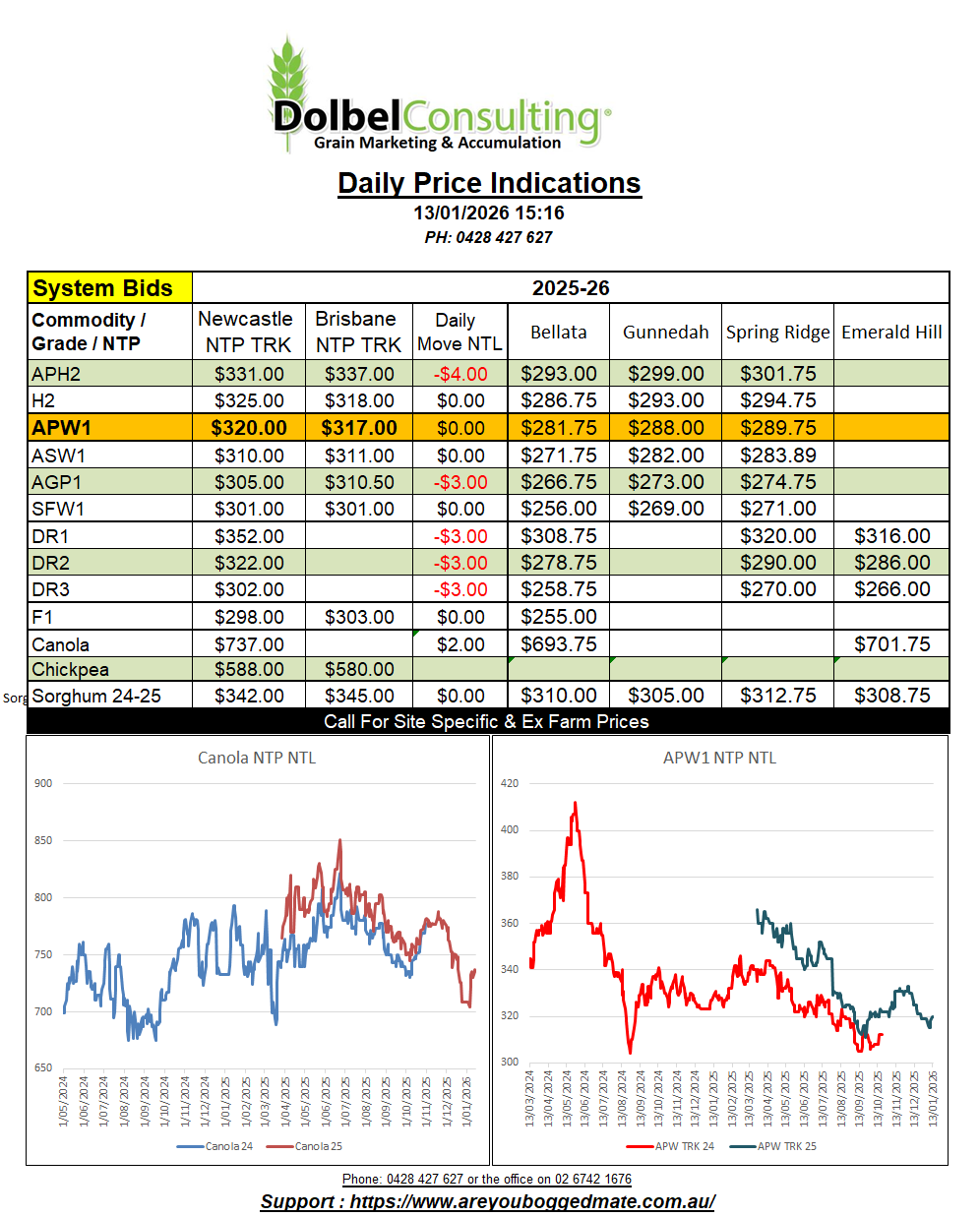
The USDA World Ag Supply and Demand Estimates (WASDE) report was out overnight. Corn appears to be the biggest loser this morning. Both US yields and area were increased. The punters have forgotten about the rapid pace of US exports and jumped onto the “sell” wagon at Chicago, smashing futures values lower. Weekly US export inspections were overlooked, at 1.49mt the number isn’t exceptional but it’s not a bad number by any means. Will the punters see this slump in prices as a buying opportunity over the next few days. Will the consumer see this as a buying opportunity over the next few days, time will tell.
As for the impact this had on US FOB sorghum values, it was minimal. Even when taking the jump in the AUD value against the US dollar into account FOB values for US sorghum out of the Gulf remained relatively flat. As for the Argie sorghum value, it’s lower, shedding a significant amount of value in an attempt to remain competitive against the Aussie product but not really succeeding to once Chinese tariffs are applied. This does raise the question of how sustainable are current sorghum values here, if Argentina continues to lower FOB offers.
There were plenty of adjustments on the wheat sheet in the WASDE, none were very big though. The net result is a higher ending stocks number, up 3.38mt from 274.87mt in December, to 278.25mt last night. The move is basically a result of larger global production, up 4.36mt from the December estimate, to 842.17mt. Increases to global demand helped counter this increase a little.
Drilling down into the data shows US ending stocks increasing 690kt, US exports were left unchanged at 24.49mt though, possibly questionable. Argentine production was increased 3.5mt to 27.5mt, more inline with current trade estimates. Russian production was also increased, up 2mt to 89.5mt, also inline with current trade estimates. If you look at both Russian and Argie ending stock increases, 1.5mt & 1.49mt respectfully, you can see where the bulk of the additional ending stocks are. Most of this was expected from the trade. Wheat appears to have been caught up with the selling in the corn pit.