
15/6/26 Prices
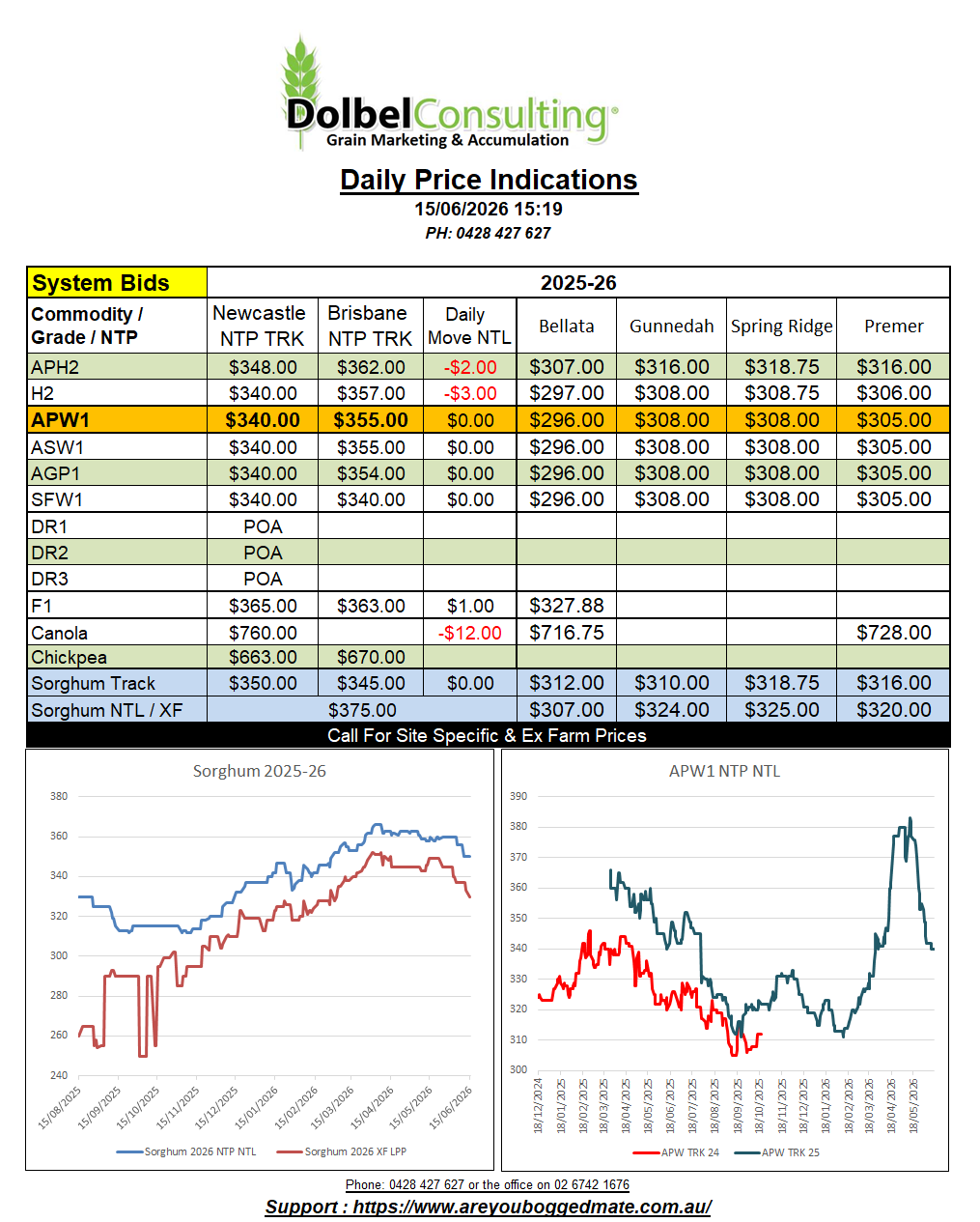
This weeks WASDE reduced US winter wheat production further. Hard red winter wheat is now at it’s lowest production number since 1957. What else would the US futures market do, well sell off lower of course. Soft red winter wheat, hard red winter wheat and spring wheat futures in the US all closed lower overnight. This follows the flow in international grain futures around the world.
The only hint of green on the screen this morning is in Chicago corn, which just managed to edge above unchanged, as did a couple of the soymeal months and the Aug 27 slot for Paris corn. All the rest were lower, London feed wheat, lower, Paris milling wheat, lower, Paris rapeseed lower, Winnipeg canola, lower, you get the picture.
Are we still talking spillover pressure from crude oil, probably. WTI crude fell US$2.83/b in the July slot. Brent crude oil fell US$3.05/b in the August slot. You would need to be working in US politics to have any hope in picking this market.
At the end of the day the US share of world wheat production has been on the decline for years. From 13% to 16% in the 1960,s to roughly 5% to 6% in 2026. Yes they are still a major wheat exporter, but a shortfall in US exportable surplus is not the global catastrophe it would have been across the later decades of last century. The start of the Russian / Ukraine war was a good example of what a major supply disruption can do to wheat futures markets, but it was also a good example of what happens to physical wheat trades and prices. The chart to see is the correlation between US futures and Black Sea wheat prices during the last 10 years. I’ll have that for you next week.
Funds produced a record sell off in grains and oilseeds over the last couple of weeks. The reason apparently is the lack of a Chinese contract number. Or is it to do with a nearing of the end of the Iranian conflict and the realisation that the world isn’t going to end if the Straight of Hormuz is “closed”. Much like wheat values at the start of the Russian / Ukraine war, oil and it’s influence on grains, appears to be repeating the trend with the Iran / Israel war.