
4/11/26 Prices
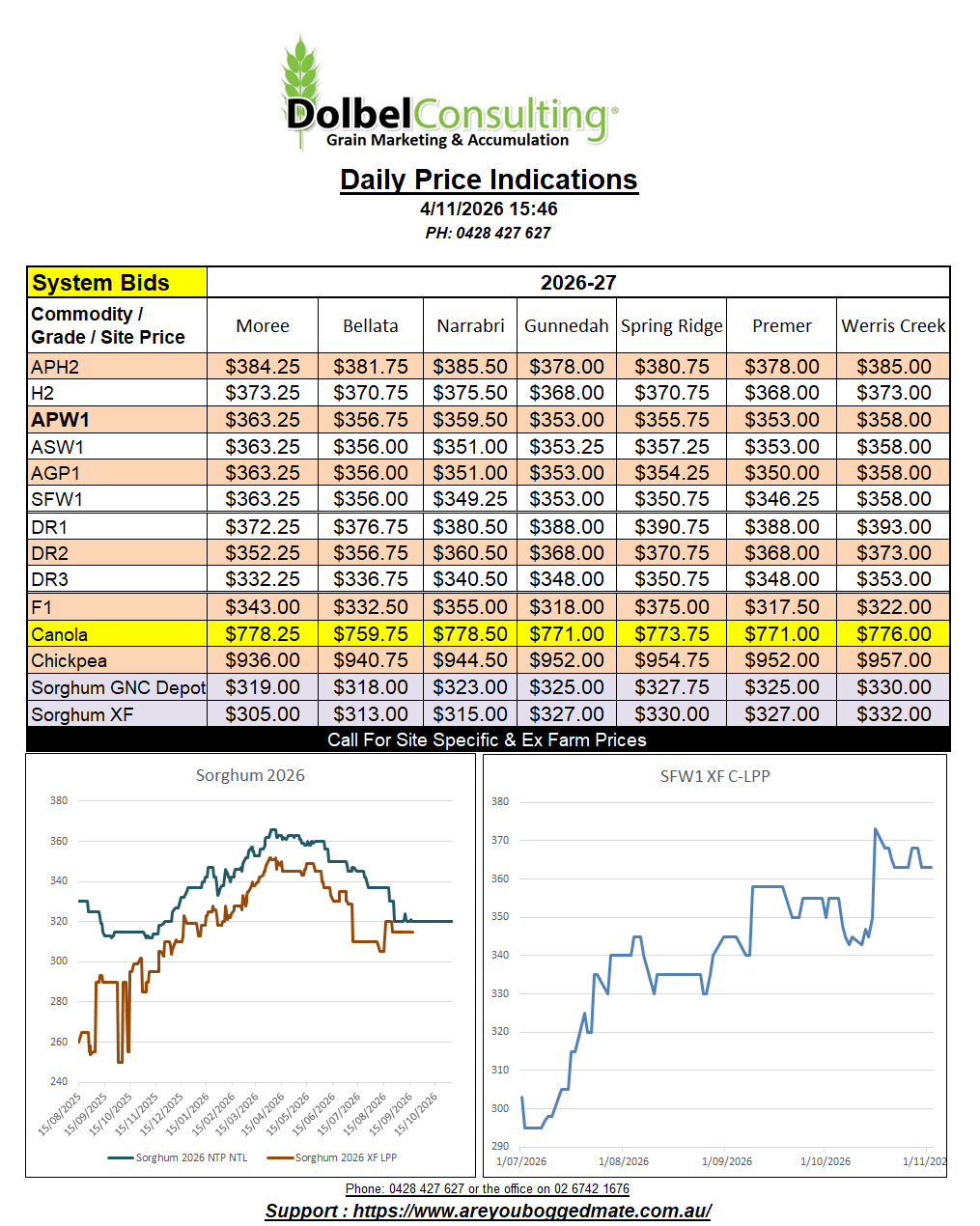
US wheat futures continued to push lower. It’s a hard market to understand at present. The last few months have puzzled many analyst. From the outside looking in it was obvious the initial move was going to be higher once the Azov Sea was blocked and port infrastructure in the Black Sea was attacked, closing wheat exports from the region. The market anticipated that the benefactors to this would be America and Europe, prices rallied.
What the punters failed to understand was that the worlds major importers of wheat has 162mt of wheat on hand and how long the importers could hold on and wait for the resumption of Black Sea trade. Major wheat importers ending stocks are falling. Opening stocks were estimated at 162.59mt in the Oct WASDE and ending stocks are expected to fall to 158.56mt, possibly lower if the Black Sea stays off line. Consumption of the major importers is estimated at 334mt. This represents a stocks to use ratio of 47.5%, in simple terms 174 days of stock if there is no more wheat.
This leaves an important question. Just how low are the major importers willing to let that stocks to use ratio decline before they hit the buy button.
The other question is, are the climbing stocks in Russia and Ukraine simply countering the declining stocks in the major importers. In the October WASDE major importers ending stocks were down 1.83mt verses the September WASDE. Russian and Ukraine ending stocks were +3.0mt month on month.
This is the issue.
The punters are now trying to do two things. Find a value where US wheat “buys” export demand, and secondly, determine what value Russian and Ukraine wheat will hit the Black Sea market at, and when. The trade have had a remarkable opportunity to accumulate domestic Russian wheat at rock bottom prices. The trade being the trade will endeavour to make as much money as they can from this wheat. Buying it in the middle of a war would after all be pretty bloody risky. The same issue arises though. If the importers are not buying US wheat when its so cheap, what value do they expect to buy Black Sea wheat at. The global S:U ratio is roughly 33%. Just a fraction lower than last year when the December contract for SRWW at Chicago for early Nov was just 540c/bu.